
ORCA launches second report
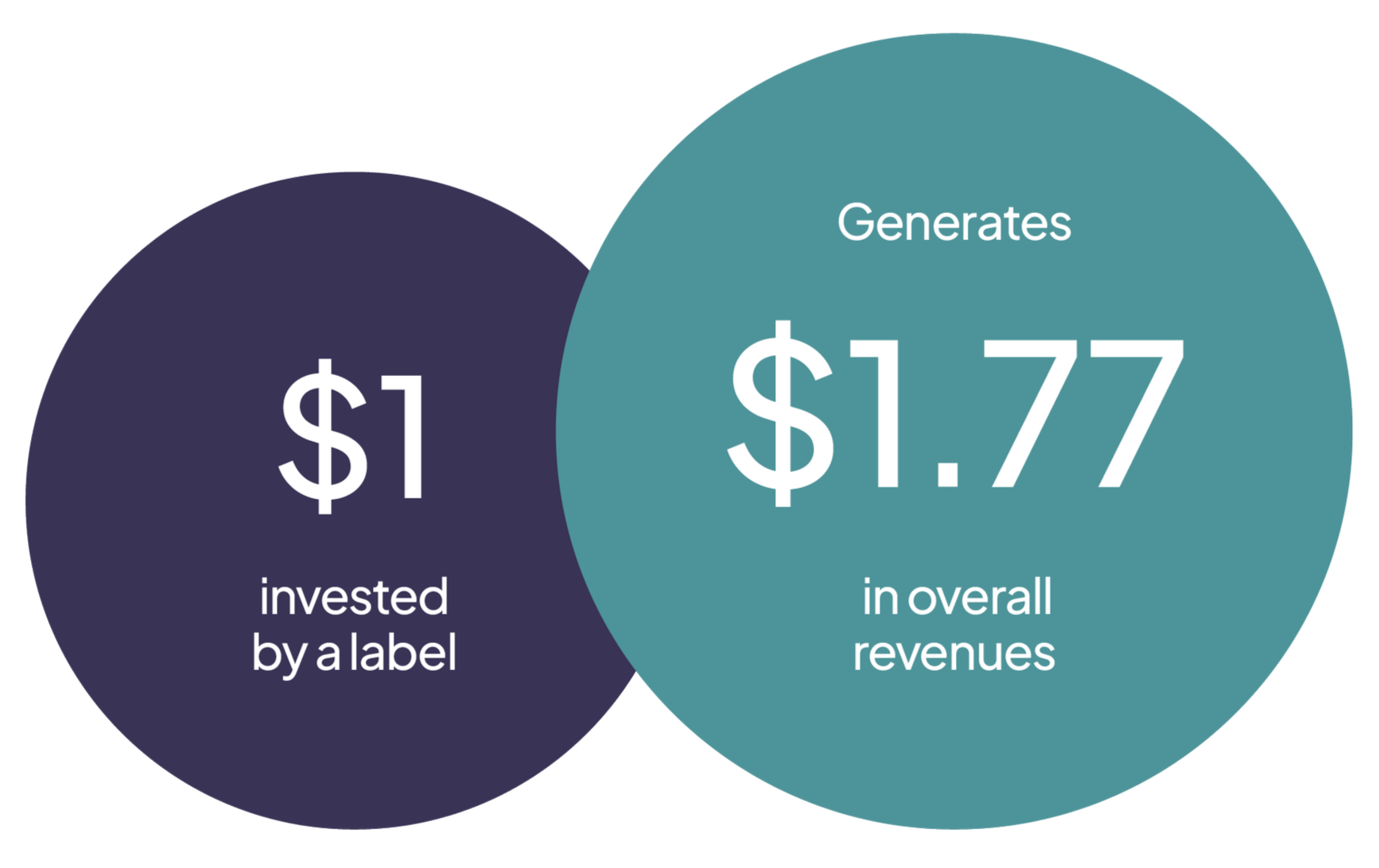
From the new report: label investment and revenue outcomes.
The Organization for Recorded Culture and Arts (ORCA) has published a new report, The Economic and Social Impact of Independent Record Labels.
Commissioned by ORCA and written by the Center For Music Ecosystems, the report analyses financial data from nine leading independent labels. It shows that in 2023, these labels invested $134 million that supported 569 artists across different genres and geographies, generating a combined revenue of $239 million.
A third (33.5%) of that revenue was paid out directly to artists, with each artist on average benefiting from $236,197 in investment, covering everything from production and touring to marketing and career development.
For every dollar invested, independents generated $0.77 in profit, and 77% of that profit ($0.59) went directly back to artists.
This investment also translated into measurable growth in artist audiences. Artists supported by participating labels saw an average 44% increase in Spotify followers between 2023 and 2025, in an environment where gaining cut-through has become hugely challenging (more than 202 million tracks were available on audio streaming services at the end of 2024).
“For the first time, we have real numbers that show the economic power of independent labels and the benefits this model delivers for artists. Independent labels have always championed a long-term mindset, developing an artist over time, taking creative risks and nurturing new sounds that shape the music industry. This report shows how this approach provides tangible and meaningful returns for artists, while sustaining a business model that benefits culture, the economy and society more broadly,” said Patrick Clifton, Executive Director, ORCA
Diverse income streams help to support artist development
According to ORCA’s report, label revenue is sourced from a diverse mix of income streams, with independent labels using different strengths and opportunities to deliver value for their artists.
Streaming accounts for the largest share in revenue at 59.5%. This is followed by physical sales at 25.9%, substantially higher than the global average of 16.4% across the recorded music sector, driven by highly engaged fanbases investing in vinyl and collector-oriented releases.
Meanwhile sync also stands out as a significant revenue contributor (7.4%), over five percentage points greater than the global average (2.2%). This figure underscores sync’s growing role as both a revenue source and promotional platform, with labels increasingly using placements across film, TV, advertising, and gaming to expand reach and strengthen artist campaigns.
“Over the past two-plus decades, I have seen the recorded music business shift from CDs, to downloads, to streaming. And now it’s streaming, vinyl, CD, cassette, and novel format du jour – all at the same time. Through it all, the constant has been independent record labels doing the heavy lifting, not only to keep up with these changes and to get important musical recordings to market, but to invest money, time, and energy to develop artists - in the truest sense of that word.
“This report shows that, while new models for distribution and marketing are constantly emerging, the independent record label model continues to provide the expertise, resources, and support musicians need to reach ever-bigger audiences and develop sustainable careers,” said Anna Bond, Director of Planning and Initiatives, Secretly Distribution
Independent labels above industry average for women in leadership
Across the wider music industry, women hold just 13.2% of executive and senior management roles, according to the USC Annenberg Inclusion Initiative. Among the participating independent labels, that figure rises to 31.5% - more than 15 percentage points higher than the industry average - with women also making up 46.6% of total staff.
Female presence on the artist side follows a similar trend. In 2023, 23.1% of active artists at the participating labels were women, and a further 18.7% of projects involved mixed-gender collaboration, meaning women were represented in 41.8% of all artist projects. In comparison, the Counting the Music Industry study, which looked at gender representation across more than 200 UK labels, found that just 26.23% of signed solo artists were female and only 14.9% of musicians in groups were female. While further progress can still be made, this highlights a notably higher level of gender equity among the participating labels across both leadership and creative talent.
Download the report, read it on the website, or download an executive summary. The executive summary has also been translated into French, Portuguese and Spanish.
About ORCA: The Organization for Recorded Culture and Arts (ORCA) is a global think tank and advocacy group formed by leading independent record labels, dedicated to advancing the economic, social, and cultural value of music. By producing evidence-based, globally relevant research, O.R.C.A. equips policymakers, trade associations, and communities with actionable insights to strengthen music-powered ecosystems and promote inclusive industry growth.
Founding supporters: Because Music; Beggars Group; City Slang; Domino Recording Company; Everlasting Records!; Exceleration Music; Hopeless Records; !K7 Music; Ninja Tune Records; Partisan Records; Playground Music; Secret City Records; Secretly Group; Sub Pop.